

FMJ vs JHP: Which Ammo Belongs at the Range, and Which in Your Carry Gun?
2026-11-20 by Brass Kisses
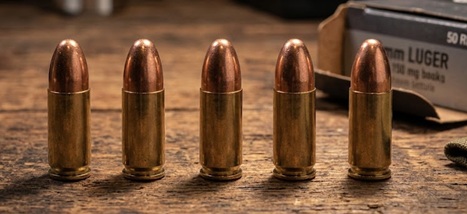
Walk down any ammunition aisle and most of what you see falls into two families: FMJ and JHP. Choosing well comes down to one idea. Each bullet type is engineered for a specific purpose, and it performs best when you let it do that job. Here is the clear version of FMJ vs JHP, and how to decide which belongs in your range bag and which belongs in your carry gun.
What FMJ Is
FMJ stands for full metal jacket. A lead core is wrapped in a harder copper alloy jacket, and the nose is closed and smooth, usually a round nose profile. That jacket does three useful things. It helps the round feed smoothly from the magazine into the chamber, it reduces lead fouling in the barrel, and it keeps the bullet intact in flight.
On impact, an FMJ bullet tends to hold its shape. It does not open up or deliberately expand. That predictable, intact behavior is exactly why FMJ is the standard for training. It feeds reliably in a wide range of firearms and shoots consistently, which makes it the right tool for drills, matches and steady practice. Loads like Brass Kisses 9mm Luger 115gr FMJ are built for exactly that kind of high-volume range work.
What JHP Is
JHP stands for jacketed hollow point. The construction starts the same way, with a jacket over a lead core, but the nose has an engineered cavity. When a JHP strikes soft material, that cavity forces the bullet to open, or expand, to a wider diameter. The expanded bullet slows faster and gives up its energy in the target.
Good expansion does not happen by accident. The cavity, the jacket and the core have to be designed and tested to open reliably at the velocities a given cartridge actually produces, and through real obstacles such as heavy clothing. Law enforcement testing protocols, most notably the FBI protocol, look for defensive bullets that penetrate roughly 12 to 18 inches in calibrated ballistic gelatin: deep enough to be effective, controlled enough to limit the risk of passing through. That engineering is why JHP is the accepted choice for personal defense, and it is the thinking behind defensive loads such as Brass Kisses 9mm Luger 124gr JHP.
Why FMJ Is Not a Defensive Load
An FMJ bullet that passes straight through its target does two things you do not want in a defensive situation. It leaves energy unused, and it keeps traveling toward whatever is beyond the target. Every responsible shooter owns every round they fire, legally and morally, including where it finally stops. Hollow points are designed to reduce that over-penetration risk. They do not eliminate it, which is why the fundamentals of knowing your target and what lies beyond it always apply, whatever bullet you choose.
Why You Should Not Train Only With JHP
You can shoot JHP at the range, and you should shoot some of it (more on that below). But building skill takes repetition, and FMJ is the practical way to get that repetition. Trigger time, grip and safe gun handling matter more to your performance than bullet construction. Most experienced shooters land on the same split: FMJ for volume, JHP for the gun you carry or keep for home defense.
Vet Your Carry Load in Your Own Gun
This is the step too many shooters skip. A hollow point nose is shaped differently from a round nose FMJ, and some pistols are more particular than others about what they feed. Before you trust any JHP for defense, fire enough of that exact load through that exact firearm, across several full magazines and every magazine you plan to carry, to confirm it feeds, fires and extracts without a hitch. Confirm your point of impact as well.
Once a load proves itself, stay with it. Keep your carry magazines loaded with the load you tested, and rotate that ammunition on a regular schedule rather than leaving the same rounds chambered and rechambered indefinitely. Repeatedly chambering the same top round can push the bullet deeper into the case over time, so inspect it and cycle it into practice.
How to Choose: A Simple Framework
- Range, training and matches: FMJ. Choose a consistent, reliable load and stick with it so your practice tells you about your shooting, not your ammunition. Our guide on how to choose reliable full metal jacket 9mm ammo covers what to look for.
- Concealed carry and home defense: a quality JHP from a manufacturer you trust, tested in your own firearm.
- Both: new production ammunition from known components, with lot tracking so you can trace any box.
Quick Answers
Is FMJ just cheap ammo?
No. FMJ is a design, not a quality grade. A well-made full metal jacket load is purpose-built for training, and it should feed, fire and group consistently every time.
Will JHP feed reliably in my pistol?
Most modern defensive pistols run quality JHP well, but a hollow point nose is shaped differently from a round nose, so confirm your chosen load in your own firearm before you carry it.
Can I use FMJ for home defense?
It will function, but FMJ is more likely to pass through its target and keep going. A tested JHP load is generally the better tool for home defense.
Are hollow points legal where I live?
In much of the country, yes, but some states and cities restrict how hollow point ammunition may be possessed, carried or transported. Know your state and local laws before you buy, carry or travel with it.
The Bottom Line
FMJ and JHP are not competing products. They are two precise tools with two jobs. Train often with dependable FMJ, choose your defensive JHP deliberately, and prove it in your own firearm. Brass Kisses, based in Sheridan, Wyoming, offers both FMJ and JHP loads in new production, and every box is lot-tracked. To find them on the shelf, visit Where to Buy and locate an authorized dealer near you.